Arriving in the UK, I found that much of my connection to society was mediated through digital behaviors like scrolling, swiping, posting, and texting rather than through interactions in physical space.
Sociologist Xiang Biao described this phenomenon as “the disappearance of the nearby,” suggesting that in our daily life we build up our perception of the world more and more through abstract concepts and principles, rather than through the perception of our own nearby.
For example, I rarely know anything about my neighbors, the security guards, or the staff in the supermarket I frequent. These people are important to my life because my daily life is organized by them and my life cannot function properly without them. They constitute my “nearby”.
Biao Xiang believes that this “nearby” is disappearing
My opinion is Not only did the “nearby” disappeared from my life, I also disappeared from the “nearby.”
The identity I would have developed through connections in my immediate surroundings, or “nearby,” has diminished, replaced by a digital identity shaped through virtual interactions.
On social media, we build our digital selves through various actions—editing images, posting photos or tweets, liking, commenting, sharing and following. I refer to the marks left by these actions as digital fragments.
I used these digital fragments to create some “missing person notice,” and I posted them on my real-life surroundings, my “nearby.”
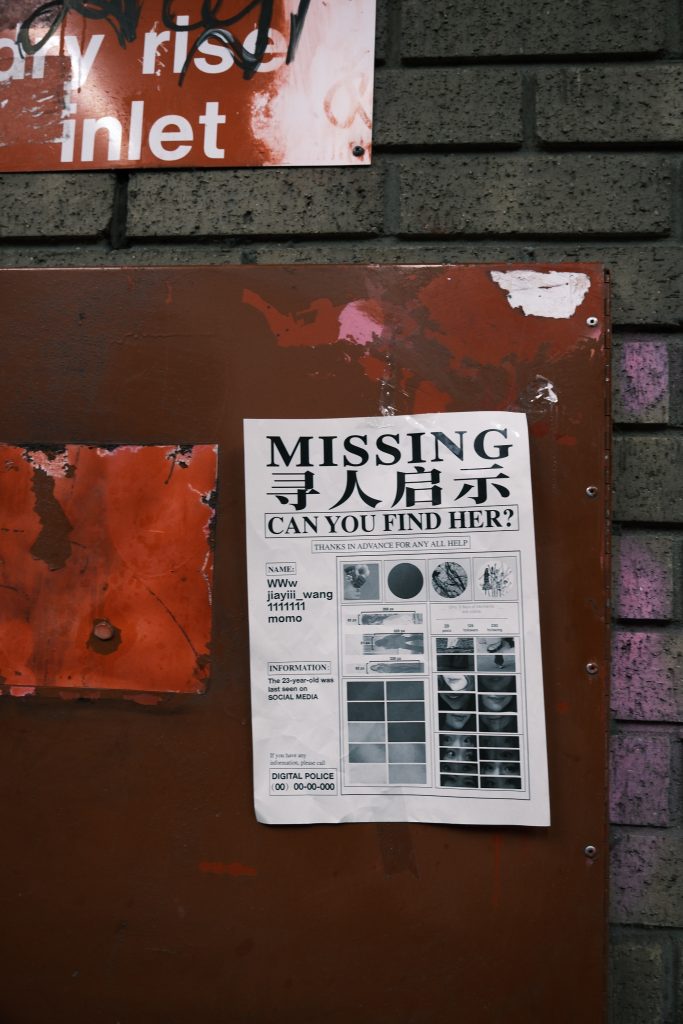
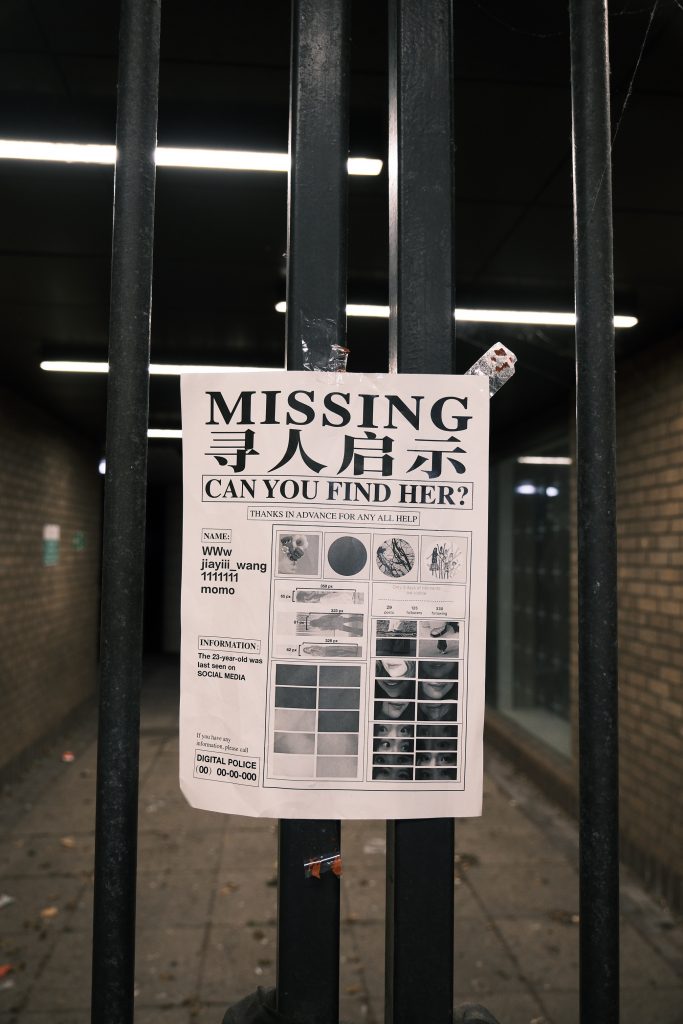
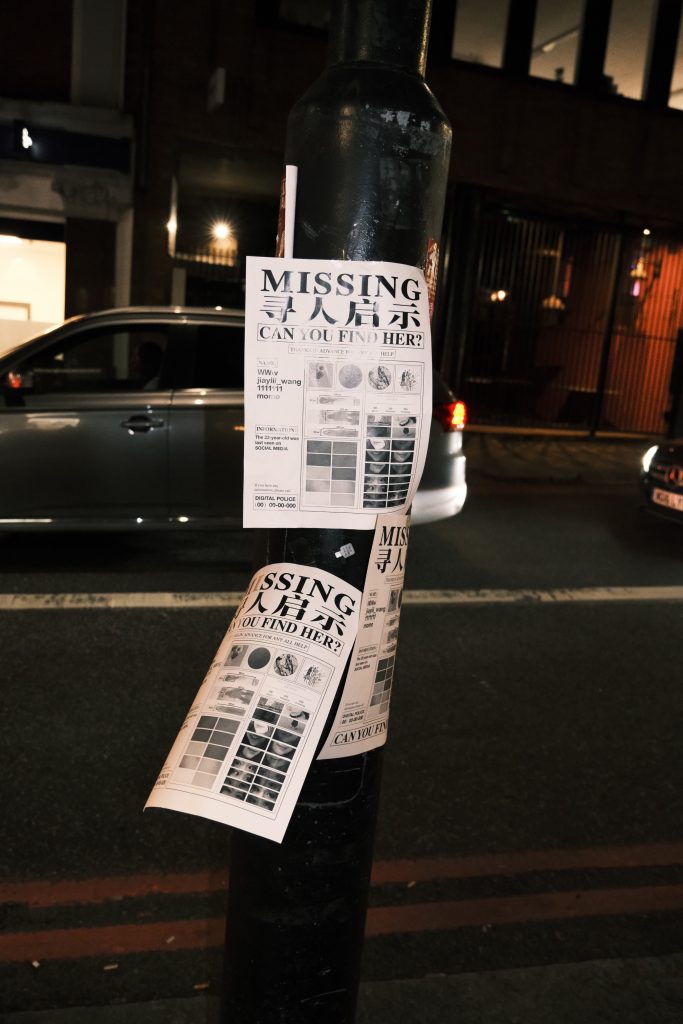
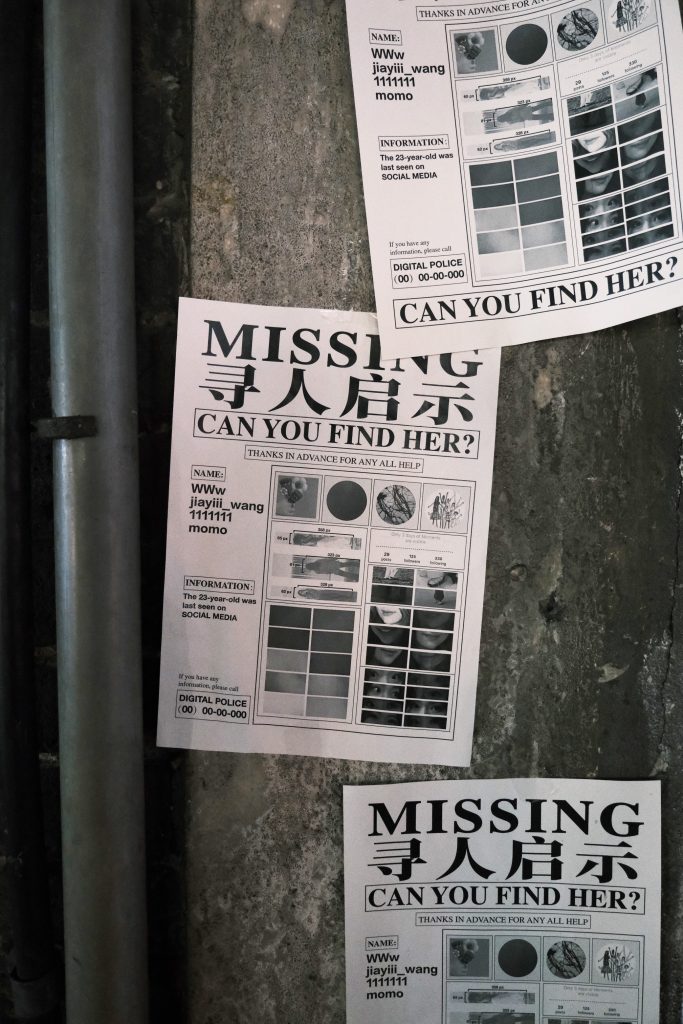
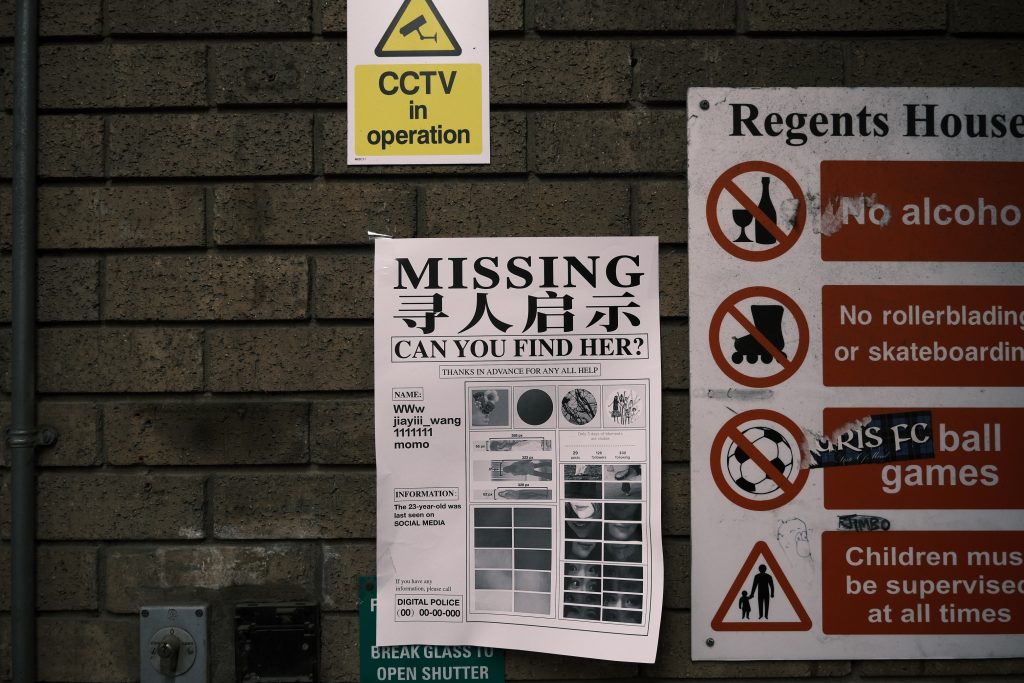
Through this, I aimed to establish a connection between my digital identity and my physical environment, questioning whether the digital age has, to some extent, erased my real identity.
This “missing person notice” represents my virtual identity, which, of course, cannot be located in real life, just as my real identity cannot be found through this notice. This dual absence leads me to ask: Who am I? And where do I exist?