Before moving to the UK, I rarely posted on social media,only seven times in five years. However, after relocating last year, I posted thirty times in a single year. This shift was driven by my need to integrate quickly into an unfamiliar environment and connect with others by actively shaping a digital identity. This change sparked my curiosity about digital identity.
The methods I used are CATALOGUE and JUXTAPOSITION,
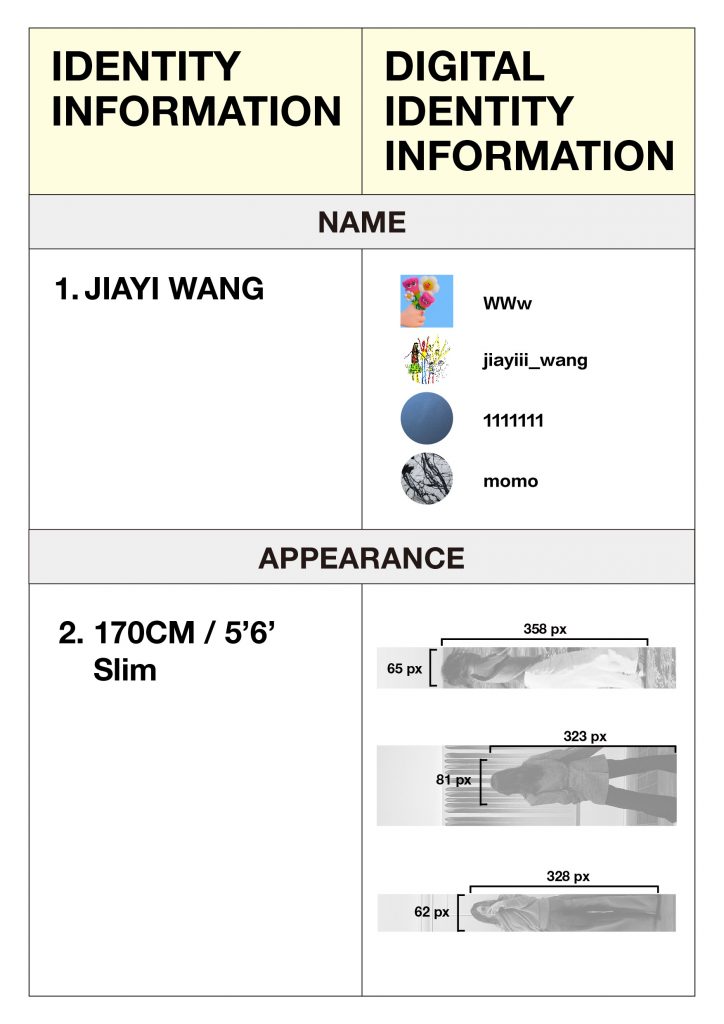
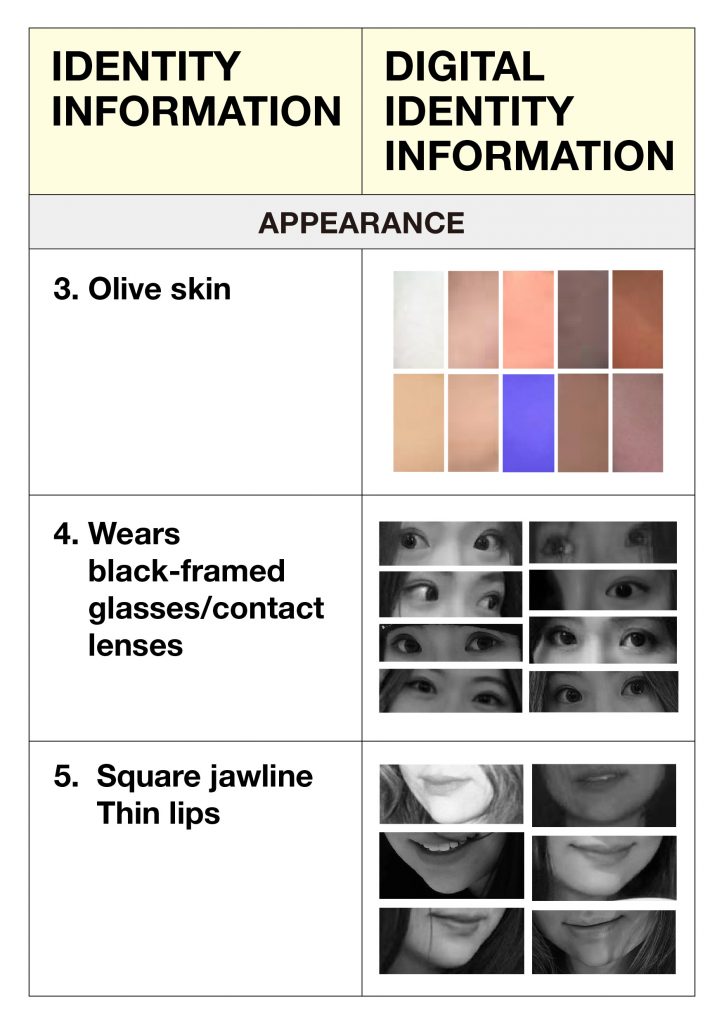
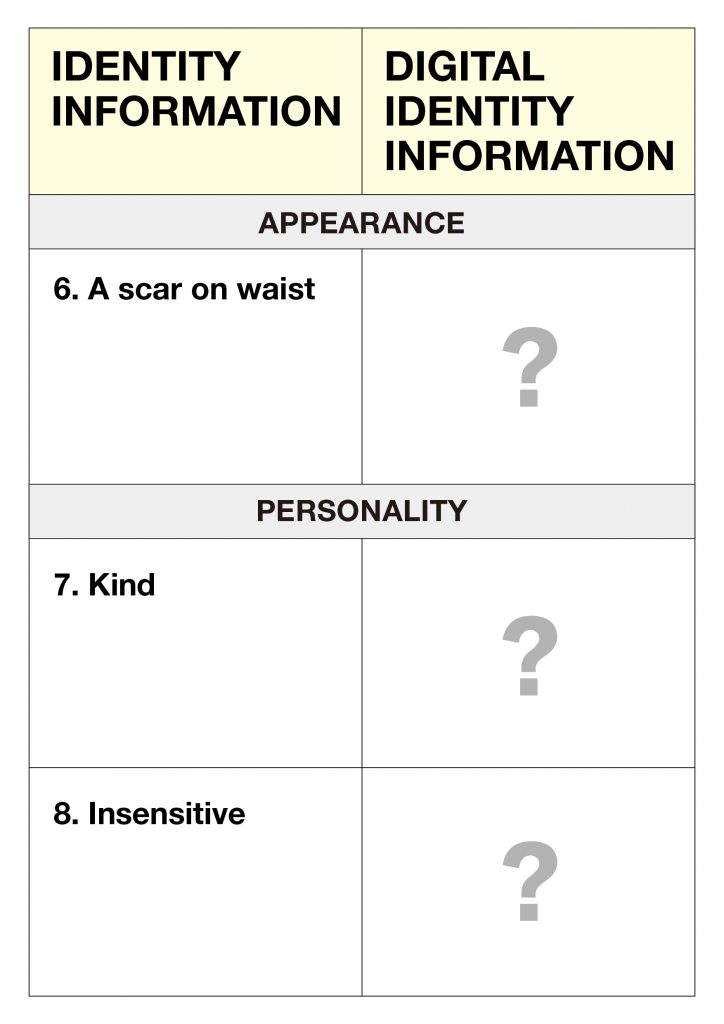
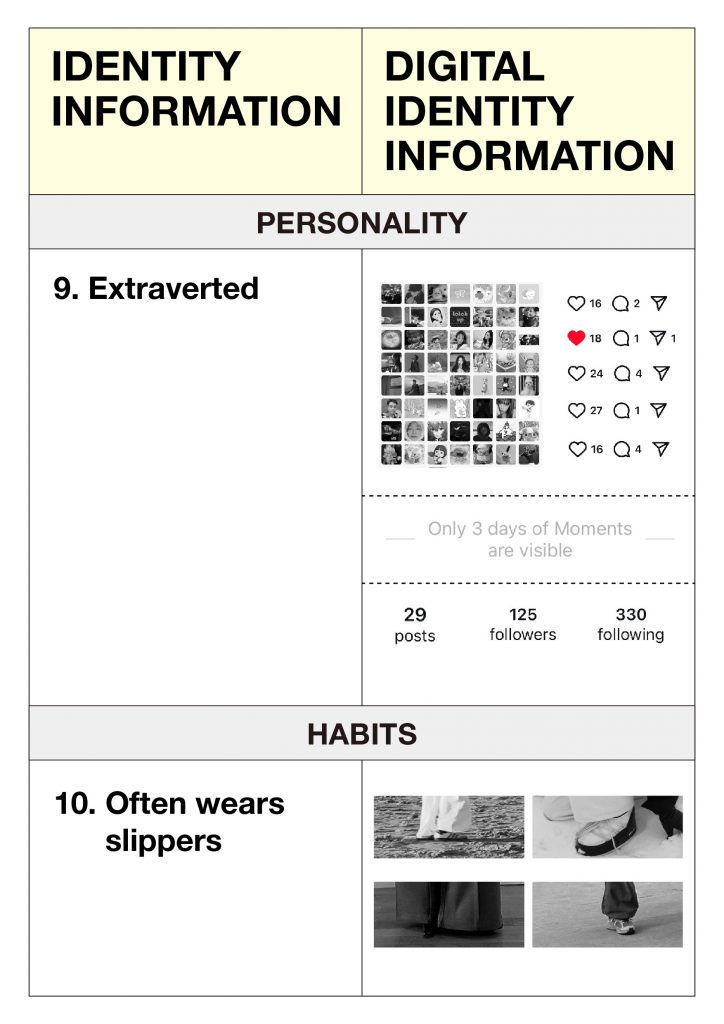
I asked my close family and friends to describe me in 10 words, so I just want the descriptions of my identity from them to understand how they perceive me in real life. That is my real-life descriptions, On social media, we build our digital selves through various actions—editing images, posting photos or tweets, liking, commenting, sharing and following. I refer to the marks left by these actions as digital fragments.
And in my project, I created a table to map real-life descriptions against my digital fragments,my online persona. By juxtaposing these real-life descriptions with how I present myself on social media, I could identify areas of alignment and disparity. For instance, while my friends and family described me as someone who wears black-framed glasses, I realized I have never posted a photo of myself wearing glasses on social media. And they described me as some with square jawline, but on the photos i posted online, I always photoshop it to make it not that square.
The digital identity I built seemed more like a better version of myself than the real me. I hope to show my talents, my taste, or what I ideally want to look like. So I feel like Social media not only influence how we present and perceive ourselves, but also determine the value we give ourselves.